
If you’re into remote-controlled drones, or planes, understanding your RC transmitter is key to getting the best performance. Your transmitter is the device that puts you in control, letting you steer, speed up, and perform amazing tricks.
But how well do you really know it? This guide will break down everything you need to know about RC transmitters—from how they work to choosing the right one for your needs. By the end, you’ll feel confident handling your gear and ready to take your RC experience to the next level.
Keep reading, because mastering your transmitter can make all the difference in the fun and success of your RC adventures.
Rc Transmitter Basics
Understanding RC transmitters is key to enjoying remote-controlled devices. These devices let you control cars, planes, drones, and boats from a distance. Knowing the basics helps you choose the right transmitter and use it well.
RC transmitters send signals to the model, guiding its movements. They come in different types, each with its own features. Learning how they work and their types makes the hobby more fun.
What Is An Rc Transmitter
An RC transmitter is a handheld device. It sends radio signals to control models remotely. You move sticks or switches on it to give commands. These commands tell the model how to move or act.
How Rc Transmitters Work
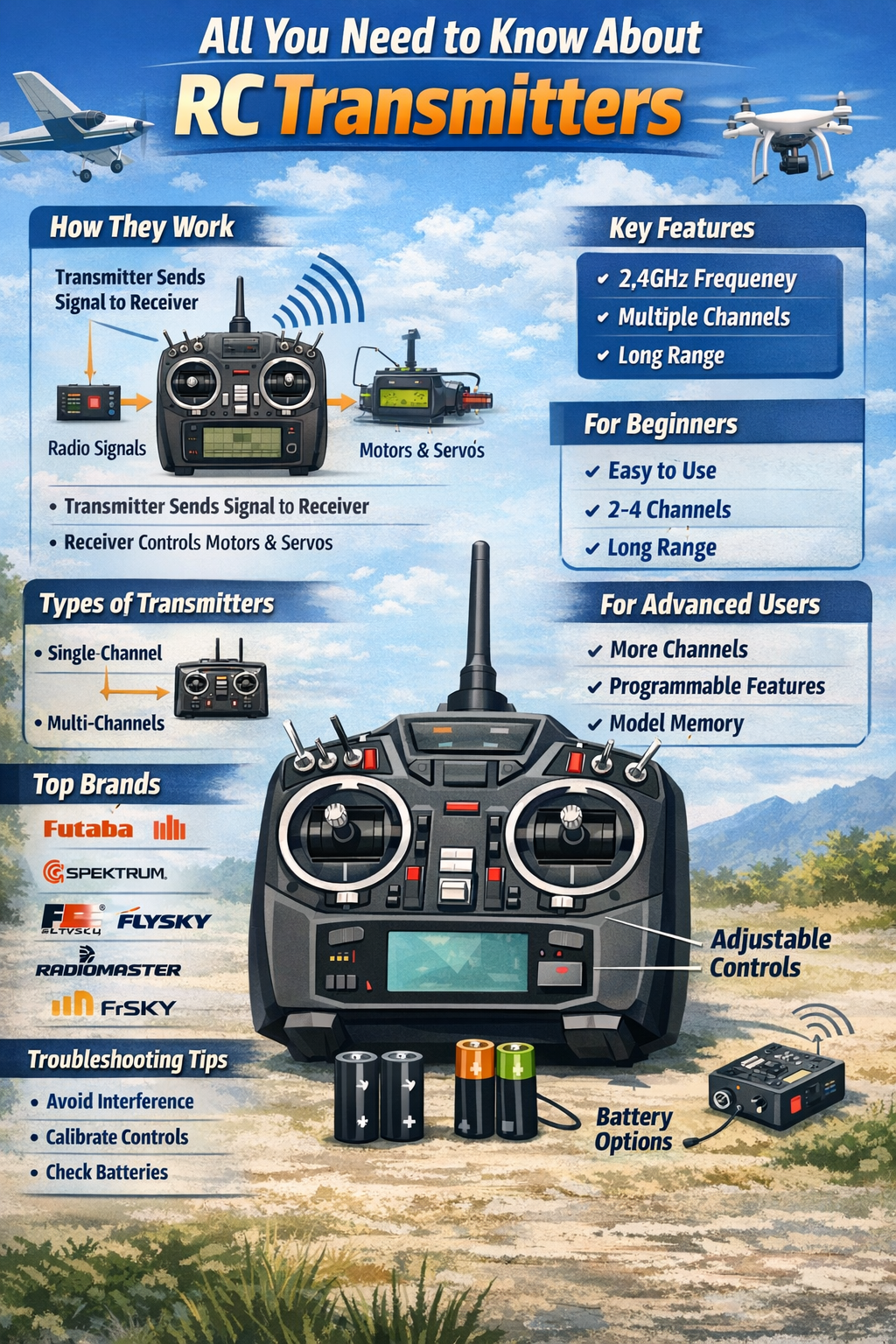
RC transmitters use radio waves to send signals. The signals travel through the air to a receiver on the model. The receiver changes signals into actions. This lets you control speed, direction, and other functions.
Types Of Rc Transmitters
There are several types of RC transmitters. The most common are single-channel and multi-channel. Single-channel controls one function, like throttle or steering. Multi-channel controls several functions, allowing complex moves.
Transmitters also differ by frequency. Common frequencies include 27 MHz, 2.4 GHz, and 72 MHz. Higher frequencies give better range and less interference. Choose a type based on your model and needs.
Key Features To Consider
Choosing the right RC transmitter can change your flying or driving experience. Knowing key features helps you pick a model that fits your needs. These features affect control, distance, and ease of use. Focus on what matters most for your hobby. Below are the essential features to check before buying.
Frequency and Range
The frequency determines how your transmitter communicates with the model.
2.4GHz transmitters offer:
Strong signal stability
Minimal interference
Automatic frequency hopping
Range is especially important for aircraft. If you’re flying planes, make sure the transmitter supports long-distance control, especially when learning how to fly an RC airplane.
Channels And Controls
Channels are the number of functions you can control. Basic models have 2 to 4 channels for simple tasks. More channels allow control of extra parts like lights or cameras. Controls should feel easy and responsive. Look for transmitters with adjustable sticks and switches. This helps you handle the model smoothly and accurately.
Battery Life And Power Options
Battery life decides how long you can use the transmitter. Longer battery life means less worry during play. Some transmitters use rechargeable batteries, others use AA or AAA cells. Rechargeable batteries save money but need charging time. Choose a power option that matches your usage and convenience. Always have spare batteries for uninterrupted fun.
Popular Rc Transmitter Brands
RC transmitters control your remote-controlled vehicles. Choosing a good brand matters a lot. Popular brands offer reliable signals and easy controls. They suit beginners and experts alike. Understanding the top brands helps you pick the best option for your needs.
Top Brands In 2025
Futaba remains a favorite for its strong signal and durability. Spektrum offers user-friendly models with smart technology. Flysky is known for affordable transmitters that work well for beginners. Radiomaster provides flexible options with customizable features. FrSky stands out with long-range and multiple model memory.
Comparing Brand Features
Futaba transmitters have precise controls but cost more. Spektrum models include easy setup and great support. Flysky focuses on simple use and low price. Radiomaster offers open-source software for customization. FrSky balances range, price, and user-friendly design well. Each brand serves different needs and budgets.
Choosing The Right Rc Transmitter
Choosing the right RC transmitter is key to enjoying your remote control hobby. It controls your vehicle or drone and affects your experience. Different users have different needs. Some want simple controls, others want many features. Your skill level and budget help decide the best choice.
For Beginners
If you’re new to RC flying, choose a transmitter that is:
Easy to set up
Lightweight
Limited in channels (4–6 is ideal)
Pairing a beginner transmitter with best RC planes for beginners makes learning much easier and reduces frustration.
For Advanced Users
Experienced pilots benefit from:
More channels
Programmable mixes
Adjustable response curves
Model memory
These features are especially helpful when flying advanced or top-rated RC airplanes.
Budget Vs Premium Options
Budget transmitters work well for casual use. They cover basic needs and cost less. Premium options offer more features and better build quality. These are good for serious hobbyists or competitions. Think about how often you will use it before buying.
Troubleshooting Common Issues
Troubleshooting RC transmitters helps keep your device working well. Problems can stop your model from responding. Identifying issues fast saves time and frustration.
Many common problems have simple fixes. Understanding these issues improves your control experience. Let’s explore key troubles and easy solutions.
Signal Interference
Signal interference causes your model to lose control or act oddly. Other electronic devices or nearby transmitters can block signals. Walls and metal objects also weaken connections.
Change location to avoid crowded areas. Use a different frequency if your transmitter allows it. Make sure antennas are straight and not damaged. Check for loose wires or connectors that may cause weak signals.
Calibration Problems
Calibration issues lead to unsteady or wrong responses from your model. Controls may feel too sensitive or too slow. Your transmitter needs regular calibration for accuracy.
Follow the user manual for calibration steps. Reset trims and sticks to the center before calibrating. Perform calibration in a calm, interference-free space. Repeat calibration if controls feel off during use.
Battery And Power Failures
Low battery or power failure stops your RC transmitter from working. Weak batteries cause signal drops and sudden shutdowns. Always check battery levels before flying or driving.
Use fully charged batteries or fresh cells. Replace old or damaged batteries promptly. Clean battery contacts to ensure good power flow. Keep spare batteries ready for longer sessions.
Future Trends In Rc Transmitters
The future of RC transmitters holds many exciting changes. Advances in technology will improve control, range, and user experience. These upgrades will make flying drones and controlling models easier and more fun. New trends will also bring better connections with other devices.
Technological Innovations
New RC transmitters will use advanced chips for faster signals. This means less delay and smoother control. Battery life will improve, allowing longer use without charging. Some transmitters will have touchscreens for easier settings and feedback. Enhanced sensors will help detect obstacles and adjust controls automatically.
Integration With Smart Devices
RC transmitters will connect more with smartphones and tablets. This lets users customize controls through simple apps. Live video feeds from drones will show directly on smart devices. Voice commands might become common, making control hands-free. Sharing flight data and settings will become easier through cloud syncing.
Frequently Asked Questions
What Is An Rc Transmitter Used For?
An RC transmitter controls remote-controlled vehicles like cars, planes, and drones. It sends signals to the receiver for precise movement. It allows users to operate models wirelessly from a distance, enhancing control and enjoyment in RC hobbies.
How Do Rc Transmitters Communicate With Receivers?
RC transmitters use radio waves to send signals to receivers. These signals control the vehicle’s movements by adjusting speed, direction, and functions. The communication happens on specific frequencies to avoid interference and ensure smooth operation.
What Factors To Consider When Buying An Rc Transmitter?
Consider range, frequency, channels, and compatibility when buying an RC transmitter. Also, check for ergonomic design, battery life, and ease of use. These features ensure better control, longer usage, and a more enjoyable RC experience.
Can I Use One Transmitter For Multiple Rc Vehicles?
Yes, some transmitters support multiple models through model memory settings. This feature allows switching between vehicles without needing separate transmitters. However, ensure the transmitter is compatible with each vehicle’s receiver and frequency.
Conclusion
Rc transmitters control your model vehicles with precision and ease. Choosing the right one improves your experience greatly. Understanding basic features helps you pick the best fit. Practice and patience make controlling models more fun. Keep learning about new models and technology changes.
Enjoy every moment spent with your rc hobbies. Your knowledge grows as you use your transmitter more. Stay curious and explore different options available today.